Reversed meaning
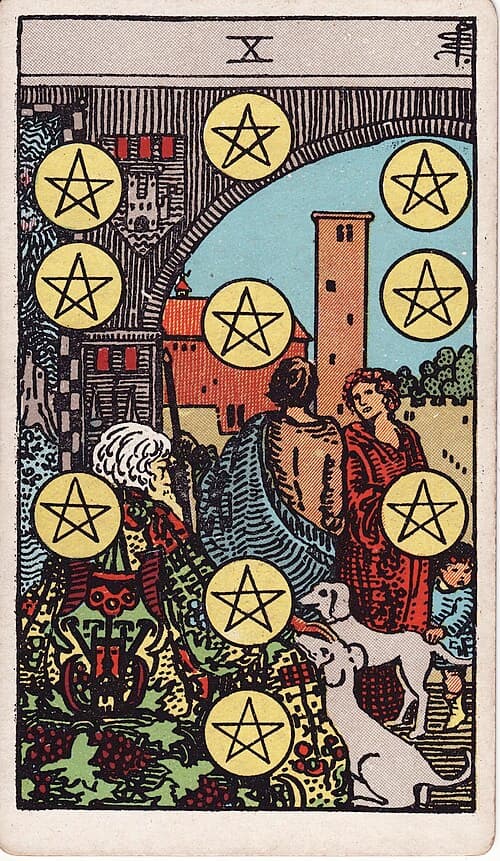
When the Ten of Pentacles appears inverted, something has disrupted the healthy flow of generational abundance. Family conflicts over money, inheritance disputes, or the breakdown of traditions that once held people together—these are the shadows of this card.
You might be dealing with the negative side of family wealth: the way money can corrupt relationships, create unhealthy dependencies, or become a source of conflict rather than connection. Perhaps inheritance is tied to control, or family businesses have become battlegrounds for power.
The reversed Ten can indicate breaking from family traditions—sometimes necessarily, when those traditions are toxic, and sometimes with loss, when we throw away wisdom along with what didn't work. Not all inheritance is positive; some families pass down debt, dysfunction, or trauma alongside any material resources.
You might be focused on short-term gains at the expense of long-term stability, consuming rather than building, or making choices that benefit you now but harm future generations. Alternatively, you may be so focused on legacy that you forget to live in the present.
This card can also indicate financial instability that affects the whole family, or the collapse of security that multiple generations depended upon. Established prosperity is threatened; what seemed permanent proves fragile.
The invitation is to examine your relationship with family, tradition, and legacy. What has been passed to you that you need to release? What are you perpetuating—consciously or unconsciously—that doesn't serve? How can you heal generational patterns while preserving genuine wisdom? Not all inheritances are worth keeping, but not all traditions deserve breaking.
Your reading
What does your card say?
Reading about a card is one thing. Drawing one with a real question in mind is where it gets personal. It's free, and you can save your reading.
Start a free readingIn love, work and life
Love & Relationships
Family opposition to relationships, or love complicated by inheritance and family dynamics. Relationships that break from tradition, for better or worse. Generational patterns affecting current partnerships.
Career & Work
Family business conflicts, or career choices that disappoint family expectations. Breaking from traditional paths—sometimes liberating, sometimes isolating. Short-term career moves that undermine long-term building.
Money & Finances
Financial disputes within family, lost inheritance, or squandering of generational wealth. Short-term thinking that undermines long-term security. Debt or dysfunction passed down through generations.
Spirituality & Growth
Disconnection from ancestral wisdom, or being burdened by religious/spiritual traditions that no longer serve. Examining what spiritual inheritance to keep and what to release.
Questions to reflect on
- What family patterns or inheritances am I perpetuating that don't serve anyone?
- Are current conflicts about money really about money, or about deeper family dynamics?
- What traditions have I discarded that might actually contain wisdom?
- Am I building for the long term, or consuming what previous generations built?
Upright vs reversed
The Ten of Pentacles represents legacy, inherited wealth, and the fulfillment of building something that lasts across generations. This card celebrates family wealth, tradition, and enduring prosperity.